
Coaching and Mentoring in Education

Coaching and mentoring have become cornerstones of professional development in the Further Education (FE) sector. While both approaches aim to support growth, learning, and confidence, they differ in their focus, style, and outcomes. Understanding these distinctions is essential for educators who wish to harness the full potential of these methods, whether supporting learners, colleagues, or their own professional journey.
Definitions and Distinctions
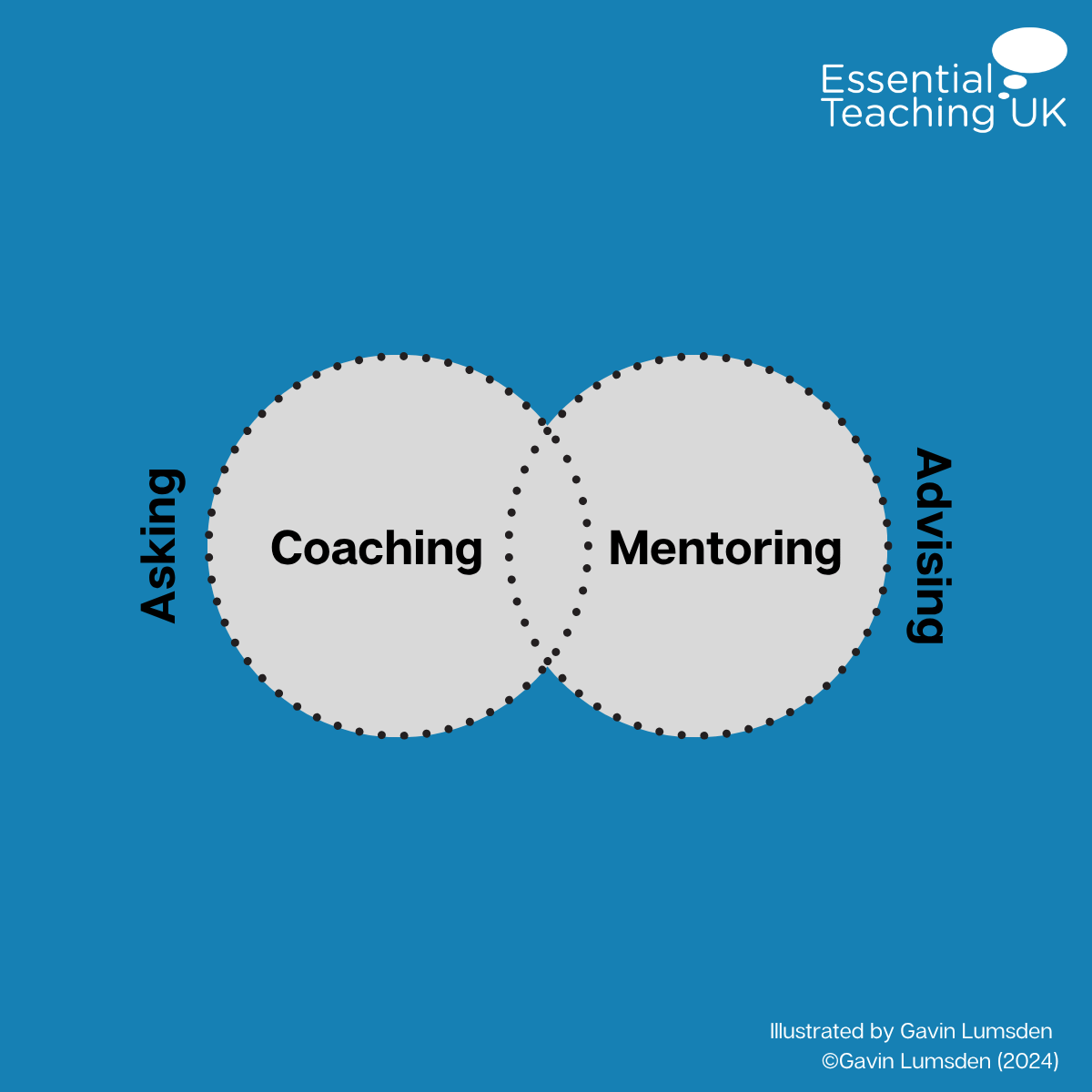
At their core, coaching and mentoring are both supportive relationships designed to foster development. However, their methods and intended outcomes set them apart. Coaching is typically a short-term, goal-oriented process. It is non-directive, meaning the coach does not provide direct answers but instead asks purposeful, thought-provoking questions. This approach encourages the learner (or coachee) to reflect, identify their own solutions, and unlock their potential. For example, a coach might help a new teacher set specific goals for classroom management and guide them through reflective questioning to develop their own strategies.
In contrast, mentoring is more relationship-driven and long-term. A mentor, often a more experienced practitioner, provides guidance, shares expertise, and supports the mentee’s personal and professional growth. The mentor’s role is more advisory, offering feedback, practical advice, and sometimes direct instruction. For instance, a mentor might help a new teacher navigate the complexities of curriculum planning over the course of a year, sharing insights from their own experience.
Both coaching and mentoring can occur formally through structured programs or informally, as part of everyday professional interactions. Increasingly, they are recognised as integral components of modern teaching and teacher development.
Key Roles and Attributes of Coaches and Mentors
Effective coaches and mentors share a set of core professional attributes, though their roles in practice may differ. Both require strong interpersonal skills, such as active listening, building rapport, and giving constructive feedback. Emotional intelligence is crucial, as is the ability to foster trust and create a safe environment for growth.
Professional dispositions like trustworthiness, patience, humility, and self-awareness are equally important. Coaches and mentors must be able to manage boundaries, respect confidentiality, and remain non-judgmental. Technical skills, such as effective planning, time management, and the use of questioning techniques, underpin successful coaching and mentoring relationships.
In the FE sector, these roles manifest in various ways:
Learner Mentor: Supports individual learners, especially those facing barriers to learning, by providing tailored guidance and encouragement.
Classroom Coach: Works with groups or individuals to promote engagement, self-directed learning, and reflective practice.
Teacher Coach: Assists newly qualified or returning teachers in developing their professional skills and confidence.
Each role requires adaptability and a commitment to ongoing professional development, as the needs of learners and colleagues evolve over time.
Benefits and Challenges of Coaching and Mentoring
Engaging in coaching and mentoring offers a wealth of benefits for both learners and educators. These approaches can build confidence, motivation, and autonomy, encouraging individuals to take ownership of their learning and professional growth. They also support the development of a strong professional identity, improve relationships and communication, and enhance overall performance and engagement.
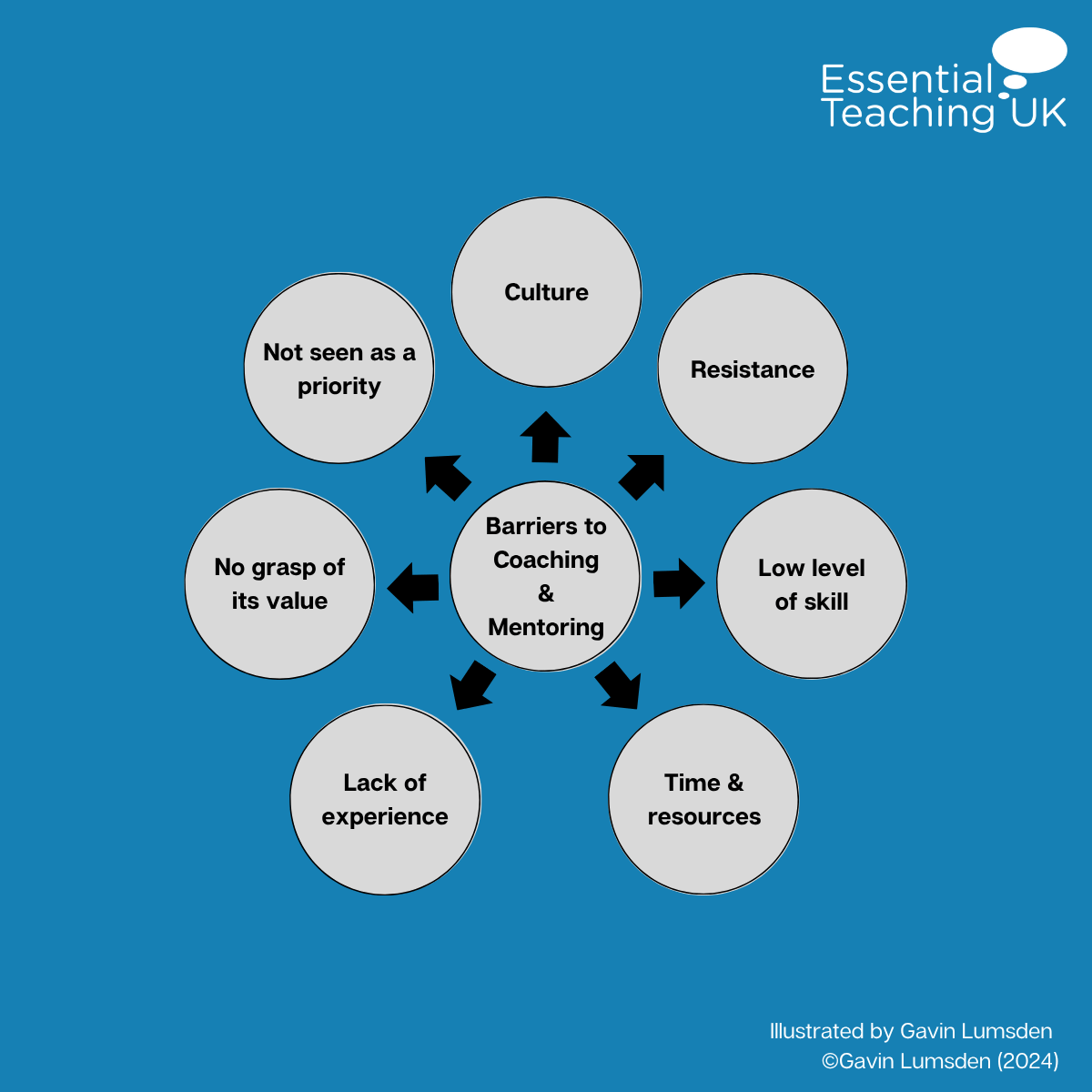
However, there are also risks and limitations to consider. Over-dependency on a coach or mentor can hinder independent growth, while time constraints, value and level of skill may limit the effectiveness of these relationships. Mismatched personalities or approaches can create friction, and unclear boundaries may lead to confusion or bias. Additionally, resistance to advice or a not seen as a priority from the learner or mentee can impede progress.
Recognising and addressing these challenges is essential for creating productive, sustainable coaching and mentoring relationships. Clear communication, regular reflection, and a willingness to adapt are key strategies for overcoming potential obstacles.
Key Models and Theories
Several models and theories underpin effective coaching and mentoring practice, providing structure and guidance for both coaches/mentors and their learners.
GROW and OSCAR Models
The GROW model (Goal, Reality, Options, Will) and the OSCAR model (Outcome, Situation, Choices, Actions, Review) offer structured frameworks for guiding conversations. These models help learners set clear goals, reflect on their current reality, explore options, and commit to actionable steps. For example, a coach might use the GROW model to help a teacher identify a specific classroom challenge, reflect on contributing factors, mindmap possible solutions, and develop a plan for implementation.
Kolb’s Experiential Learning Cycle
Kolb’s Experiential Learning Cycle emphasises learning through experience. The cycle involves four stages: Concrete Experience, Reflective Observation, Abstract Conceptualisation, and Active Experimentation. This model is particularly valuable for mentors working with trainee teachers, as it encourages them to reflect on their experiences, draw lessons, and apply new strategies in practice.
Tuckman’s Stages of Group Development
Tuckman’s model describes the stages groups typically go through: Forming, Storming, Norming, Performing, and Adjourning. Understanding these stages helps coaches and mentors manage group dynamics, anticipate challenges, and support effective collaboration among learners or colleagues.
Brookfield’s Four Lenses
Brookfield’s Four Lenses encourages educators to reflect on their practice from four perspectives: their own experiences, their learners’ perspectives, colleagues’ feedback, and relevant theory or literature. This holistic approach fosters self-awareness and continuous improvement, making it an ideal tool for mentors guiding reflective practice or coaches supporting change.
Practical Applications in the FE Sector
In the Further Education sector, coaching and mentoring are woven into the fabric of professional development. For example, a new teacher might be paired with an experienced mentor to navigate the transition into teaching, receiving guidance on lesson planning, assessment, and classroom management. Meanwhile, a classroom coach might work with a group of learners to develop study skills, using the GROW model to set academic goals and reflect on progress.
These approaches are not limited to formal programs. Informal coaching and mentoring can occur through peer observation, collaborative planning, or even casual conversations in the staffroom. The key is a commitment to fostering growth, reflection, and mutual support.
Ultimately, coaching and mentoring are more than just roles they are ways of being in education. By embracing these approaches, educators not only help others grow but also engage in ongoing reflection and development themselves, contributing to a vibrant, supportive learning community.
Key Takeaway: Coaching and mentoring are distinct yet complementary approaches that, when applied thoughtfully, can transform professional development in the FE sector. By understanding their differences, embracing core attributes, and applying proven models, educators can foster meaningful growth for themselves and those they support.
New Addition to help Trainee Teachers:
Occupational Duties & Standards
D1 | D4 | D6 | D7 | D9 | K5 | K6 | K8 | K10 | K13 | K16 | K17 | K19 | B1 | B4